
Process · Robotic Soldering
iBot series soldering robots
The iBot series automates soldering tasks with a soldering tool, wire feed and CCD-assisted programming. The models differ particularly in their worktables and tools.
How a soldering robot works.
A camera helps teach the soldering points. Axes guide the tool to each joint; soldering time, temperature and wire feed are programmed for the task. The soldering tip is cleaned automatically.
Typical application
Individual accessible joints or repeated hand-soldering tasks may suit a soldering robot. Material, heat demand, accessibility and cycle time should be checked on a sample assembly.
What matters when choosing a system.
Working area and fixturing
Components, fixtures and operator access determine the required travel and number of worktables.
One or two tools
iBot models offer variants with two tables, two soldering tools, or one soldering and one fluxing head.
Soldering tip and heat input
Tip geometry, wire diameter and the joint’s heat demand must be matched.
Matching systems.
Compare systems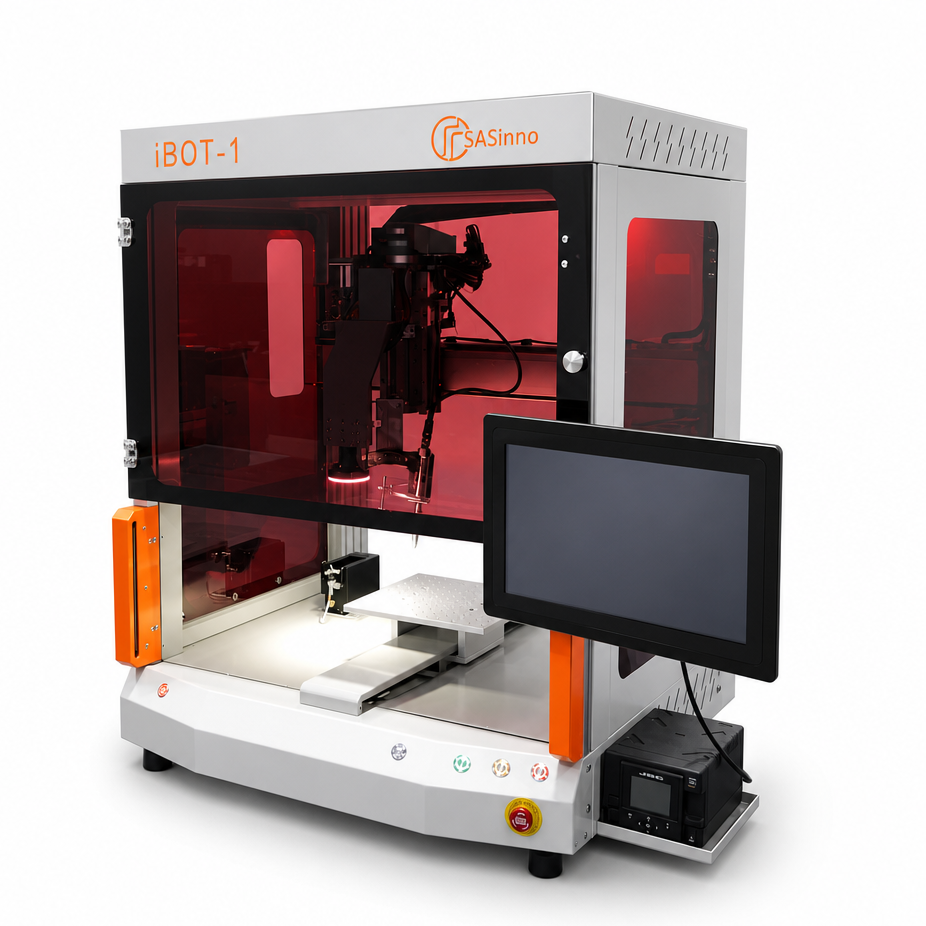
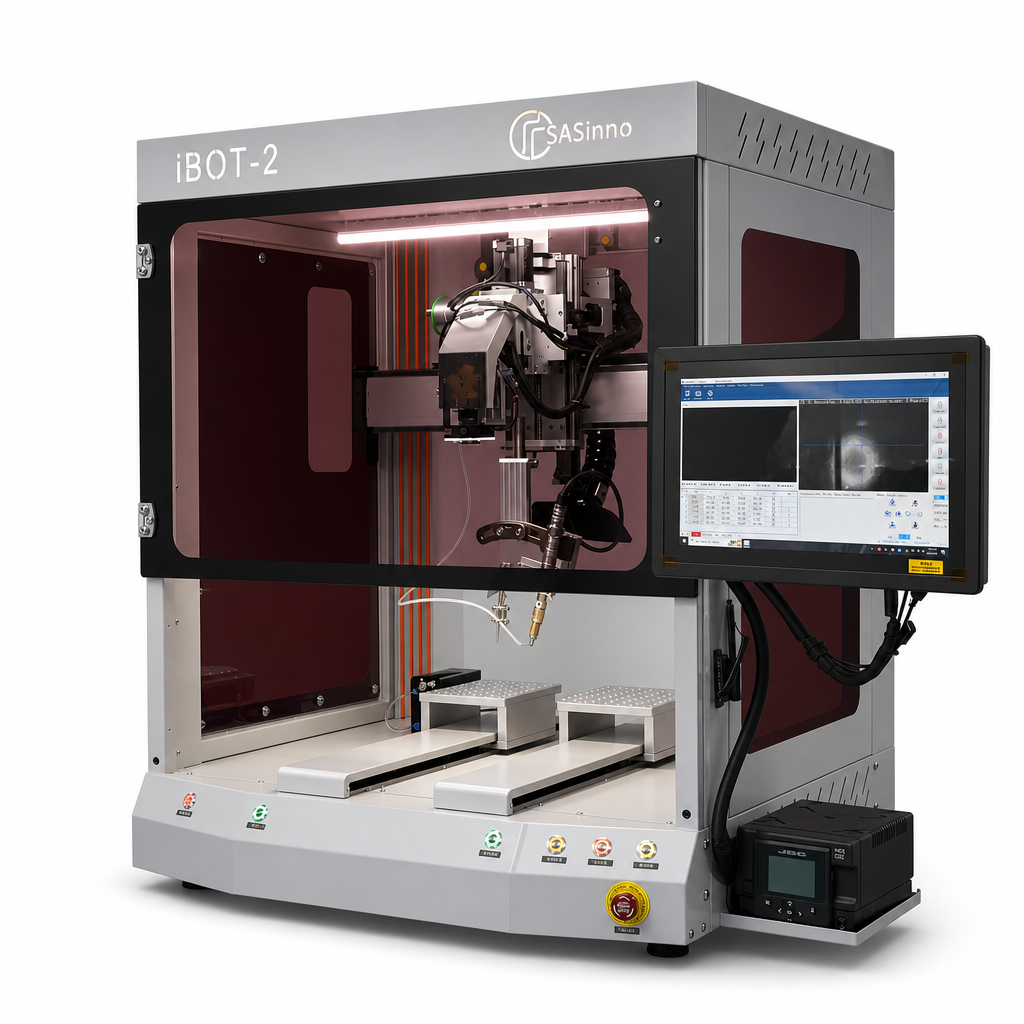
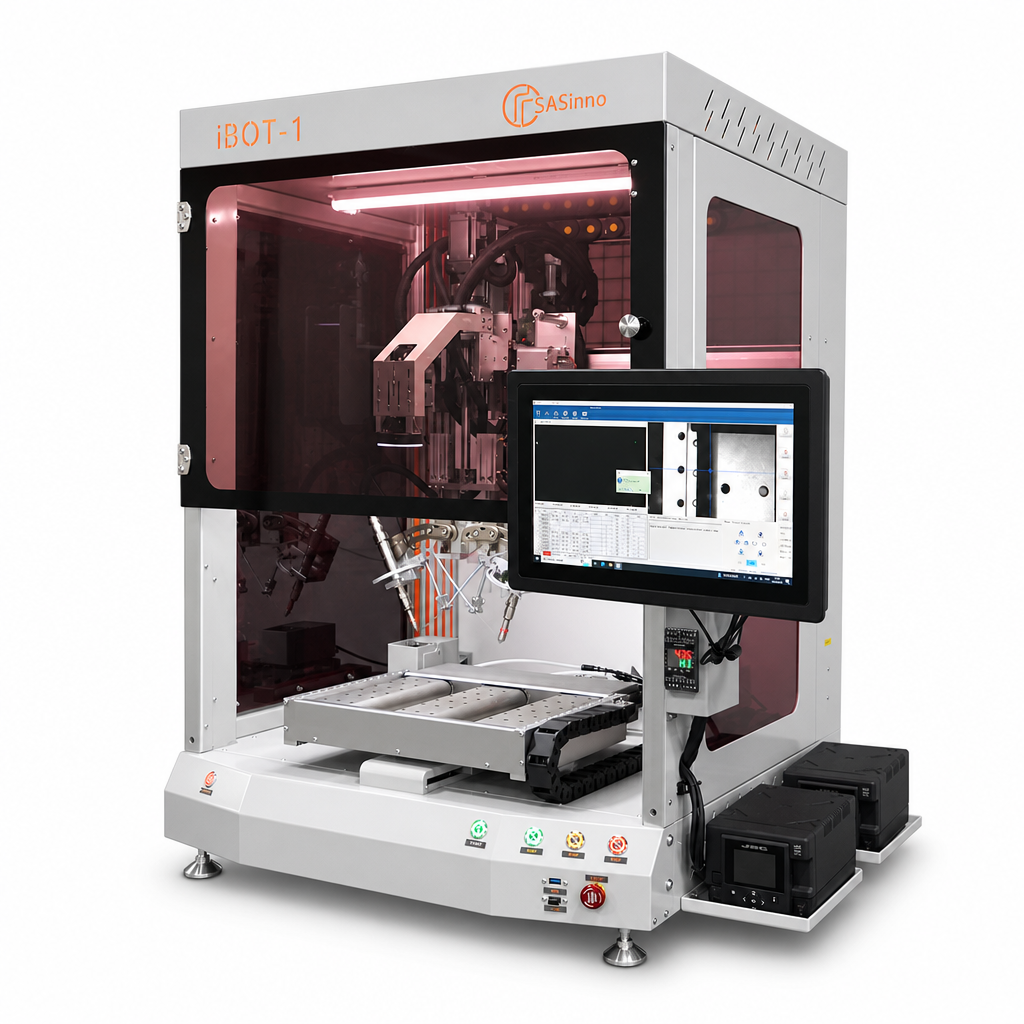
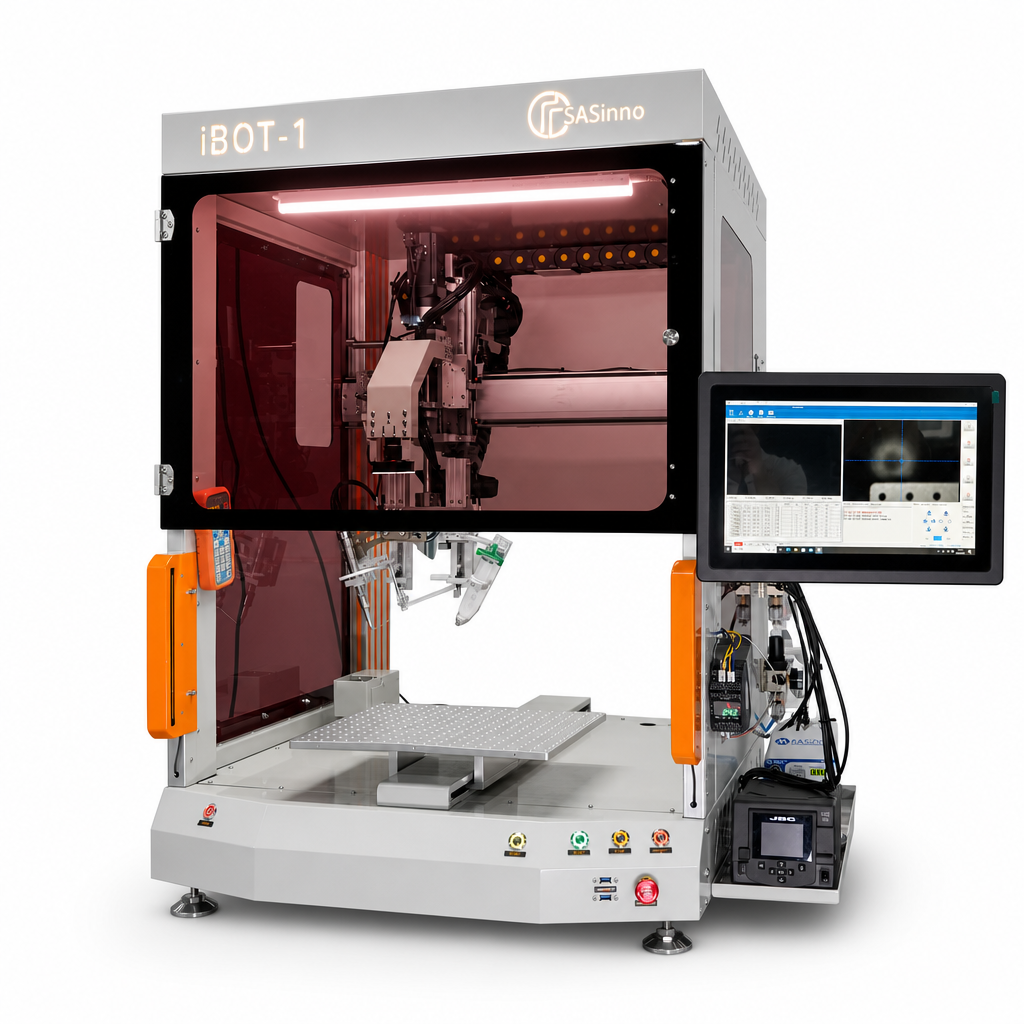
Frequently asked questions about soldering robots.
When is a soldering robot suitable?
For repeatable, accessible solder joints where tool movement and process parameters can be programmed reliably.
Can preheating be added?
A preheating platform is listed as an option for the iBot series.
Your process begins
with your assembly.
Tell us the format, application and desired production integration.