
Process · Selective Soldering
Selective soldering systems for benchtop, offline and inline production
SASinno selective soldering systems automate defined THT joints, from compact benchtop equipment and flexible offline cells to integrated inline production.
Selective soldering for demanding THT assemblies.
Selective soldering systems process defined through-hole joints individually or along programmed paths. This makes it possible to automate remaining THT joints after reflow without exposing the full underside of the PCB to a continuous solder wave. Suitability depends on layout, joint access, thermal mass, solder and flux, and the agreed quality criteria.
SASinno develops benchtop, offline and inline selective soldering systems. SASinno Europe supports system selection, sample trials, commissioning and operator training for the agreed configuration.
The process: fluxing, preheating and soldering
A drop-jet fluxer applies flux to defined areas. Preheating activates the flux and thermally prepares the assembly and joints. Programmed motion then guides the local solder wave along points or paths. Depending on the model, cameras support fiducial recognition, setup and live observation of the soldering process.
Which system concept fits?
Benchtop system
The Star-1 is designed for compact PCBs and a standalone production cell. It uses a drop-jet fluxer and a mechanical solder pump.
Offline system
Ant-i1, Ant-i2, Ultra-i1 and Ultra-i2 are loaded and unloaded separately. This suits changing products, samples, small batches and manufacturing without continuous PCB transport.
Inline system
Ultra-i2 and Ultra-i4 models integrate into the line’s material flow. Conveyor direction, transport height, interfaces and transfer to adjacent equipment must be defined before selection.
Two or four solder pumps
Multiple electromagnetic pumps enable different parallel and multi-up processing concepts. Actual throughput still depends on joint count, travel paths, preheating, PCB format and the soldering program.
System planning
The information that determines system selection.
Assembly and soldering task
Required inputs include PCB or panel format with carrier, hole and component layout, accessible THT joints, and the heights and clearances of neighbouring components. Large copper areas, multilayer boards and high-mass terminals increase heat demand and must be considered when planning preheating.
Materials and quality target
Solder alloy, flux, required wetting and permitted residues belong in the process definition, together with the acceptance criteria for a solder joint. Settings should be qualified on real sample assemblies; general machine features cannot replace an application-specific soldering trial.
Production flow and integration
For offline and inline concepts, consider volume, product mix, batch size, operator workflow and the required level of automation. Line integration also requires transport height, conveyor direction, interfaces and available floor space.
When wave soldering may be the better alternative
If many suitable THT joints can be processed in one continuous pass, a wave soldering system may fit the production task better. Selective soldering offers different flexibility for local joints, sensitive areas or frequent product changes. Our guide to selective versus wave soldering compares the two approaches.
Matching systems.
Compare systems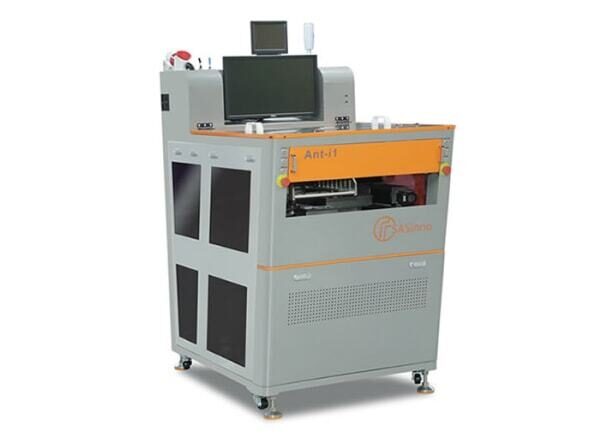
Ant-i1
Compact standalone system with drop-jet fluxer and mechanical pump for flexible offline processes.
350 × 260 mm PCB formatOffline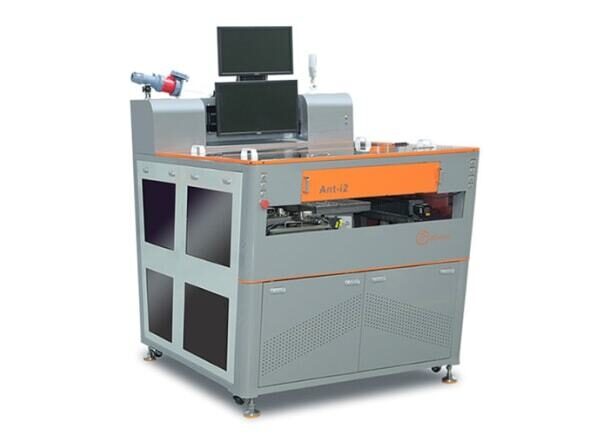
Ant-i2
Two parallel work areas, two drop-jet fluxers and two mechanical pumps for flexible offline production.
350 × 450 mm single · 2 × 350 × 215 mm parallelOffline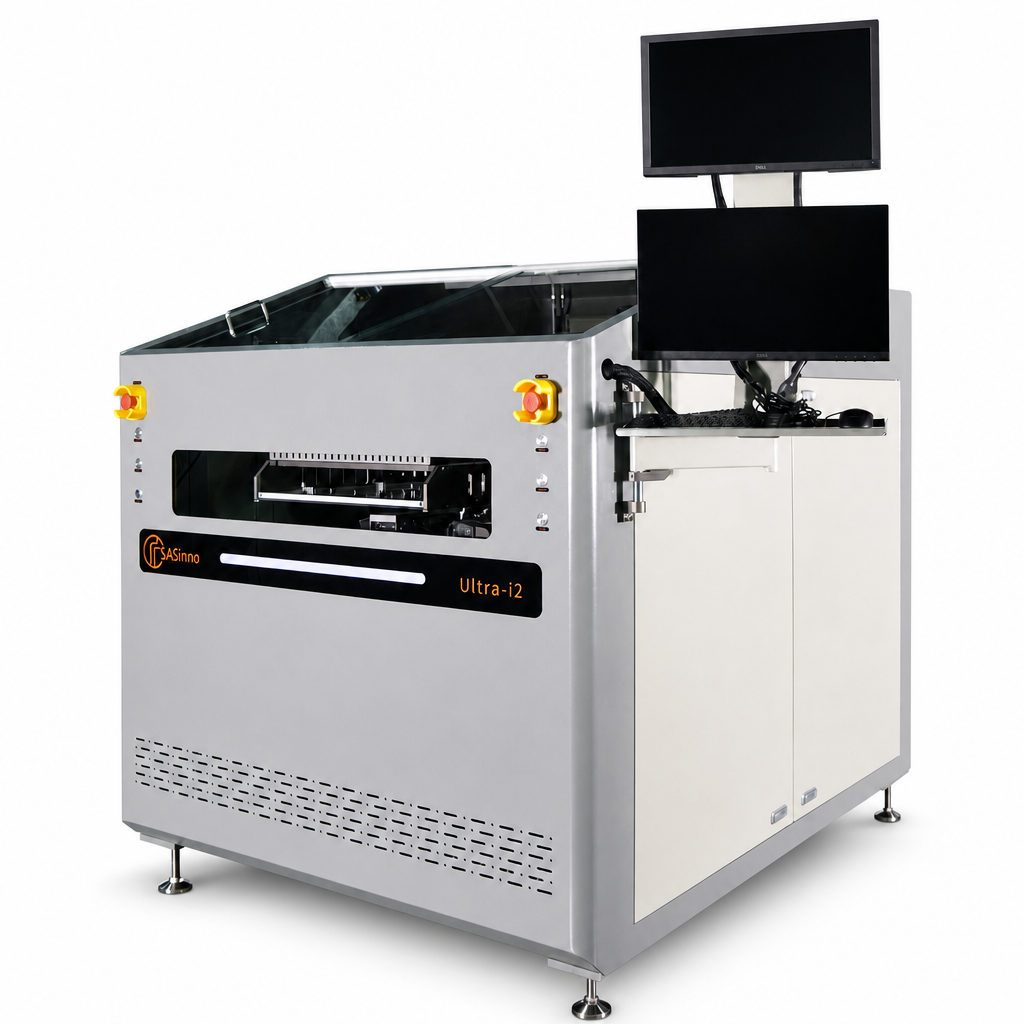
Ultra-i2
The Ultra-i2 combines two fluxers and two electromagnetic solder pots in an offline system. For THT assemblies and flexible manufacturing tasks.
460 × 510 mm PCB formatOffline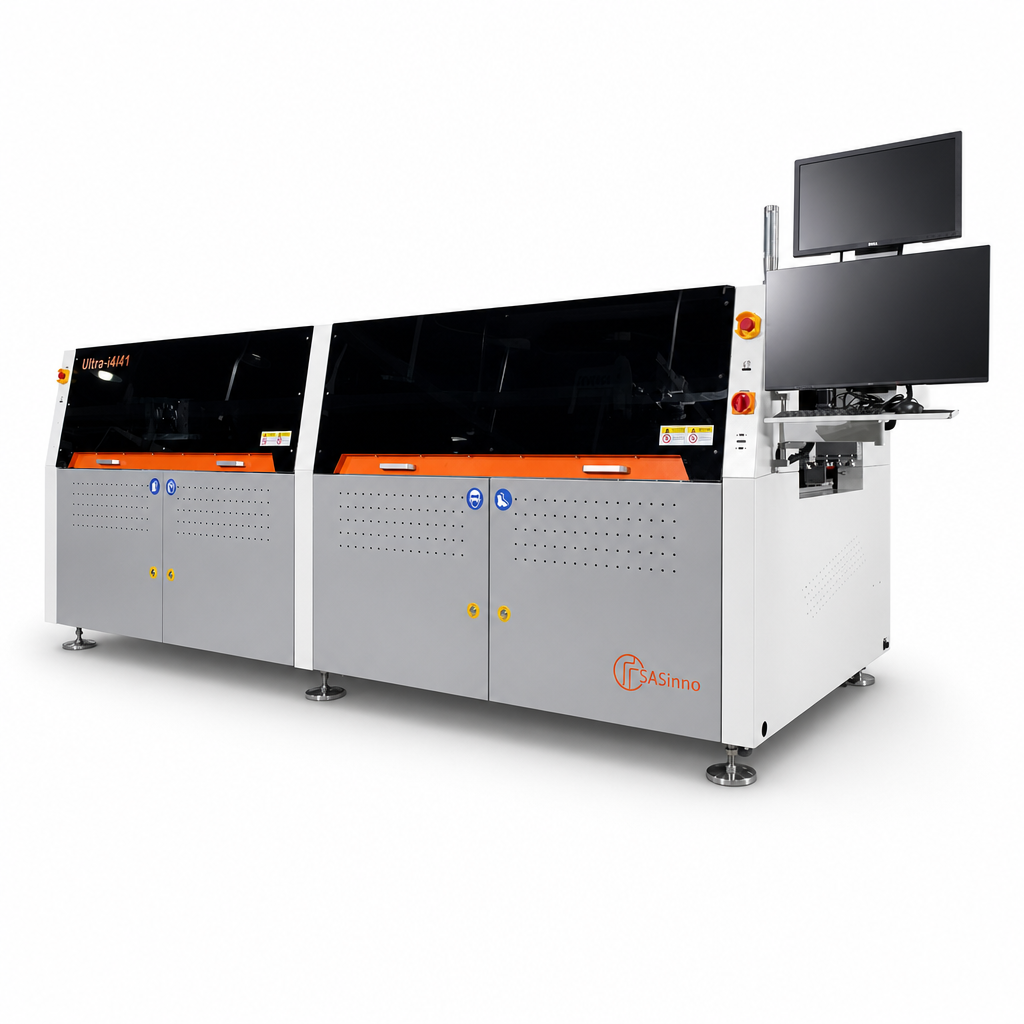
Ultra-i4/41
The Ultra-i4/41 is designed for inline selective soldering. Four electromagnetic pumps and software-controlled axes support series production.
600 × 600 mm PCB formatInline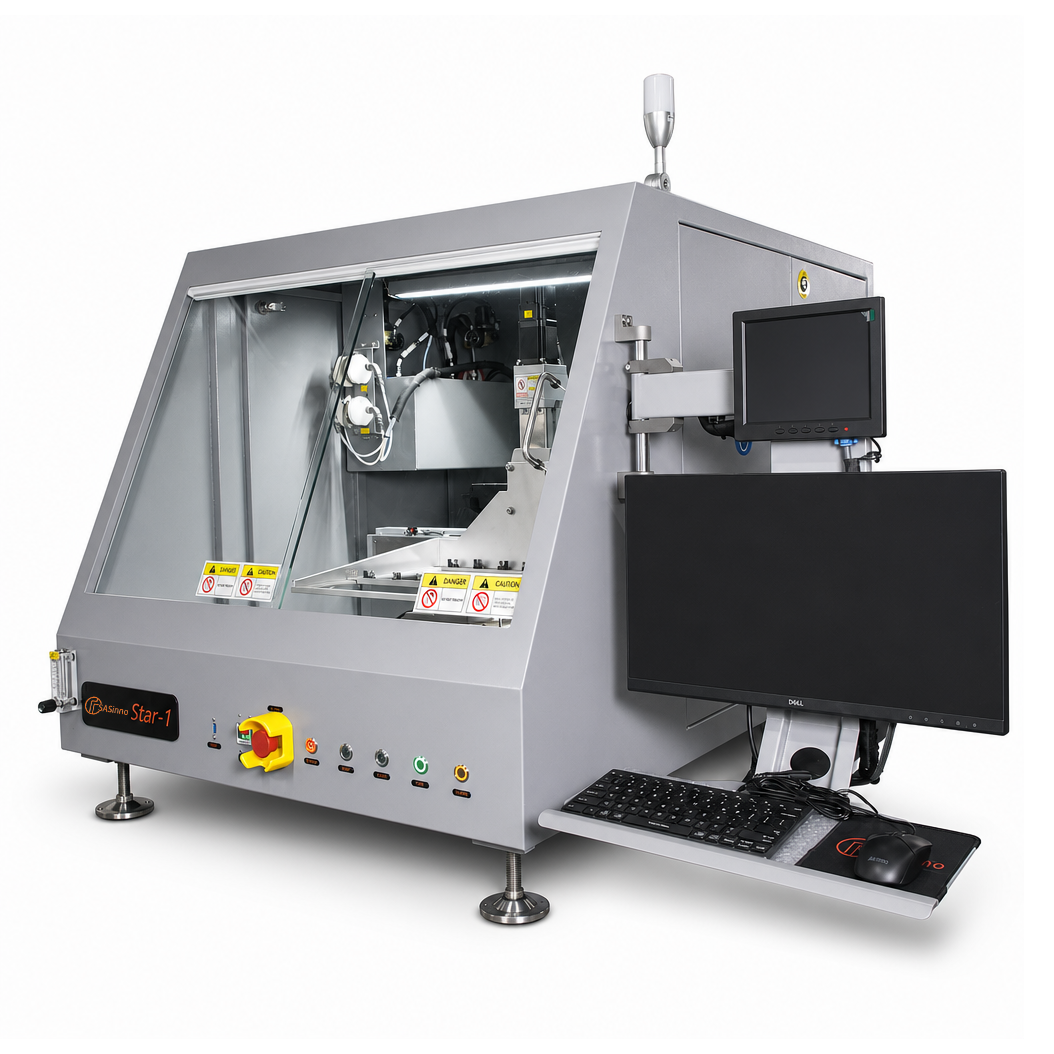
Star-1
Benchtop system with drop-jet fluxer, mechanical pump and automatic wave-height calibration.
350 × 300 mm PCB formatOffline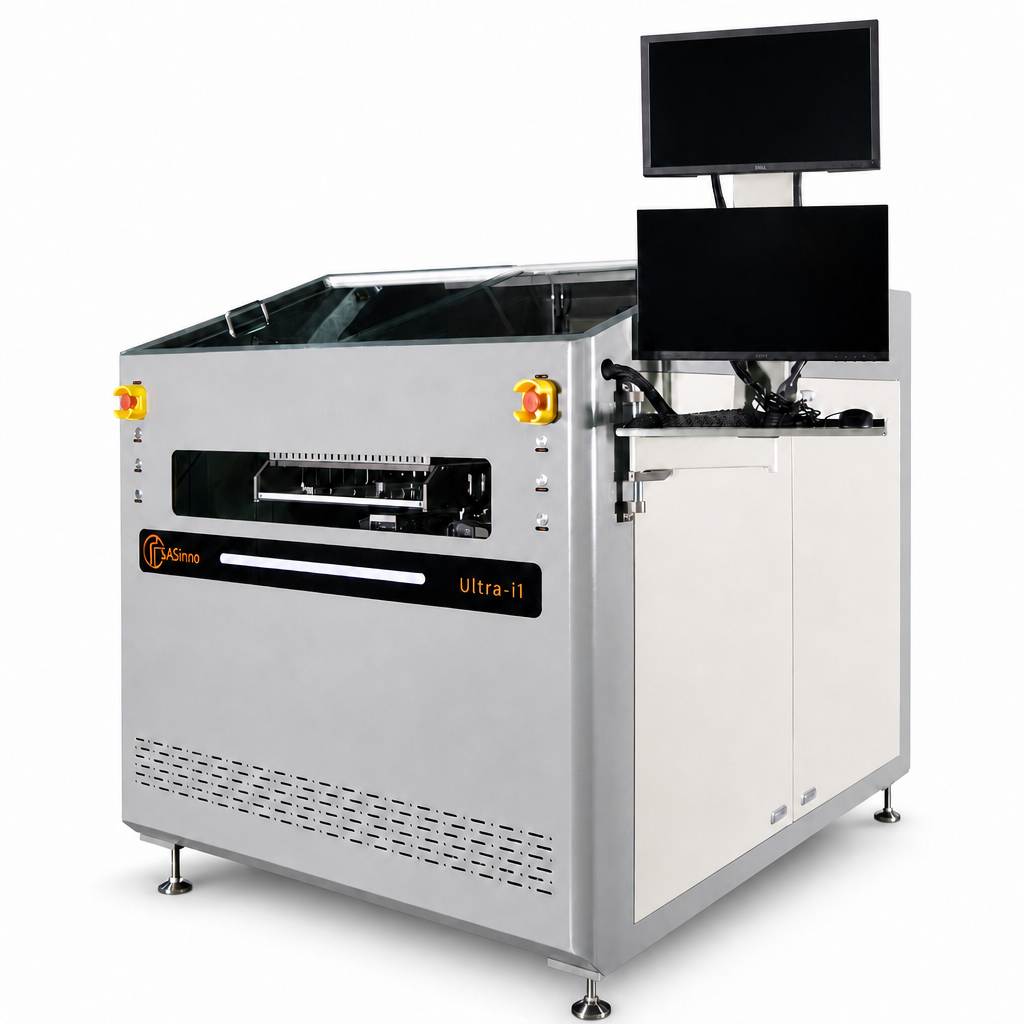
Ultra-i1
System with drop-jet fluxer, electromagnetic pump and camera for fiducials and board scanning.
460 × 510 mm PCB formatOffline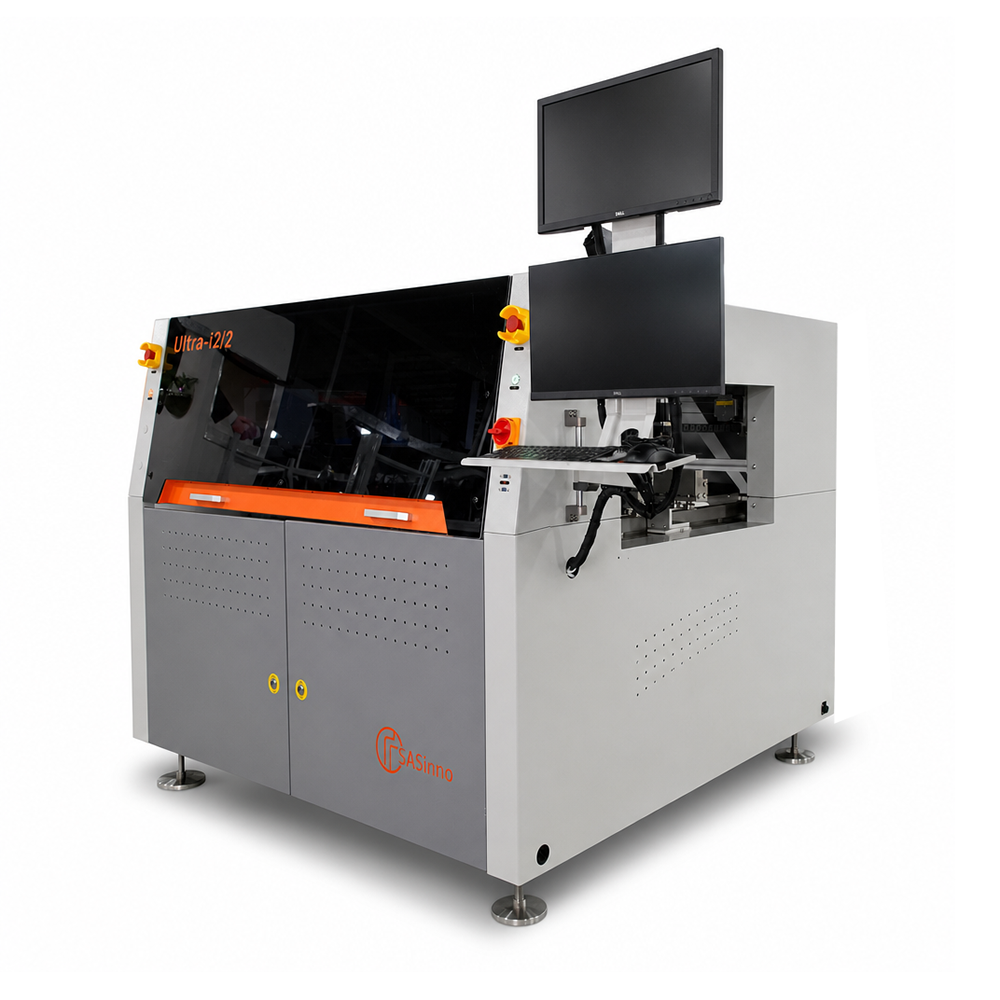
Ultra-i2/2
Inline system with two drop-jet fluxers and two electromagnetic pumps.
600 × 600 mm PCB formatInline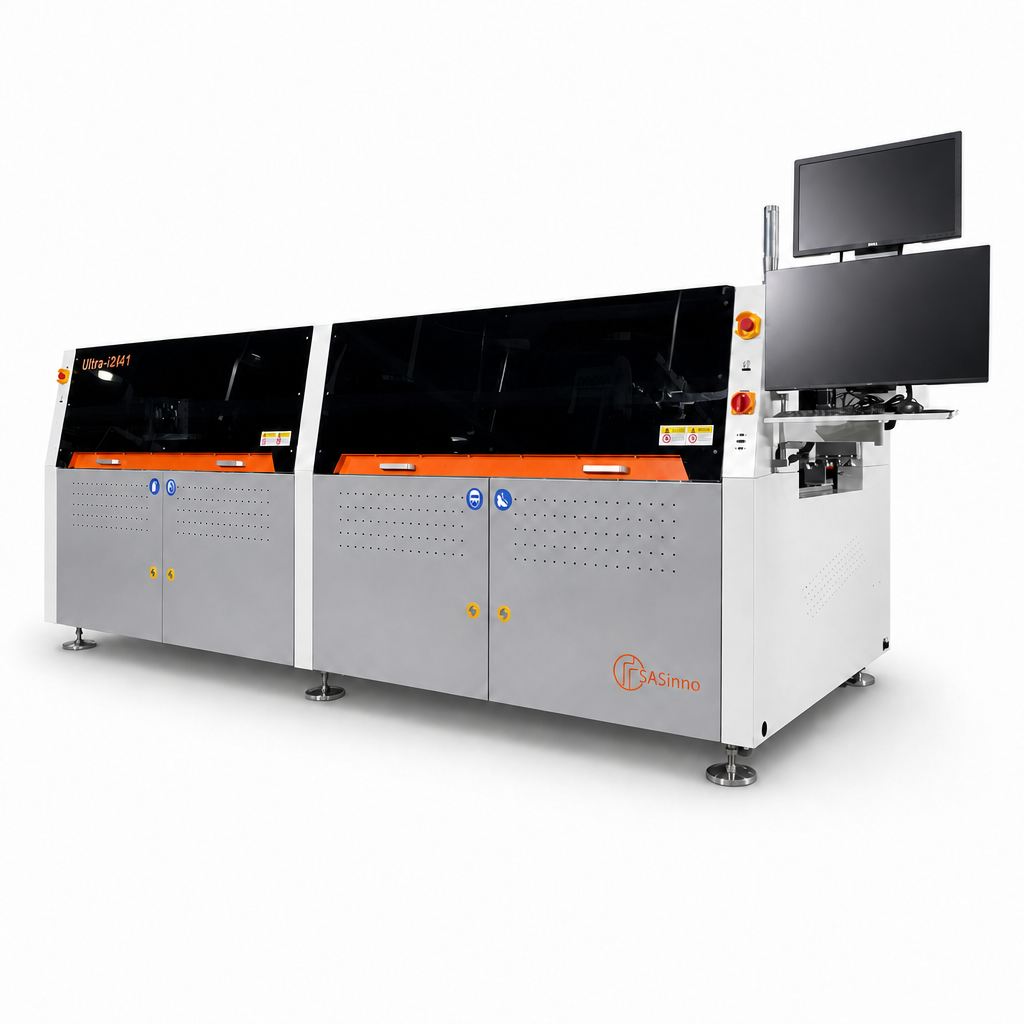
Ultra-i2/41
Inline system with one drop-jet fluxer, two electromagnetic pumps and servo axes.
600 × 600 mm PCB formatInline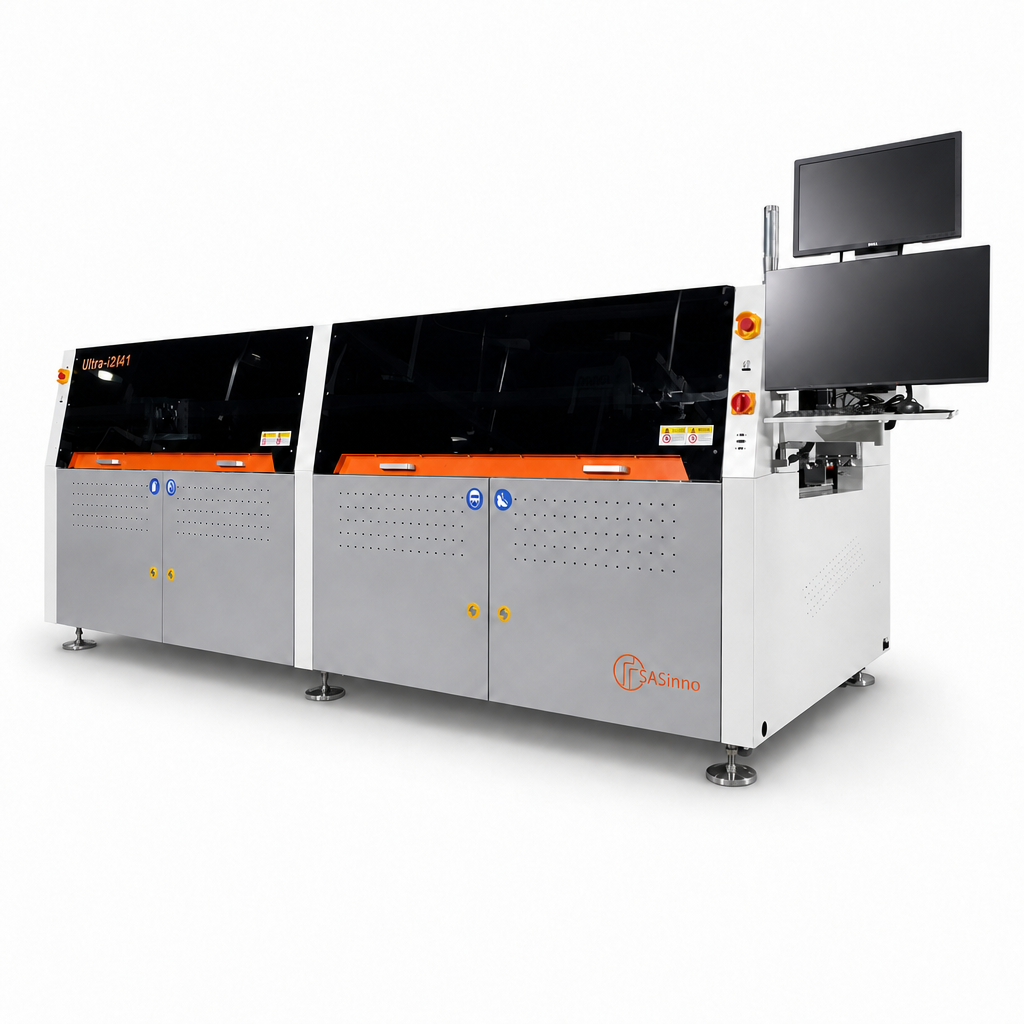
Ultra-i2/52
Inline system with drop-jet fluxer and two electromagnetic pumps.
600 × 600 mm PCB formatInline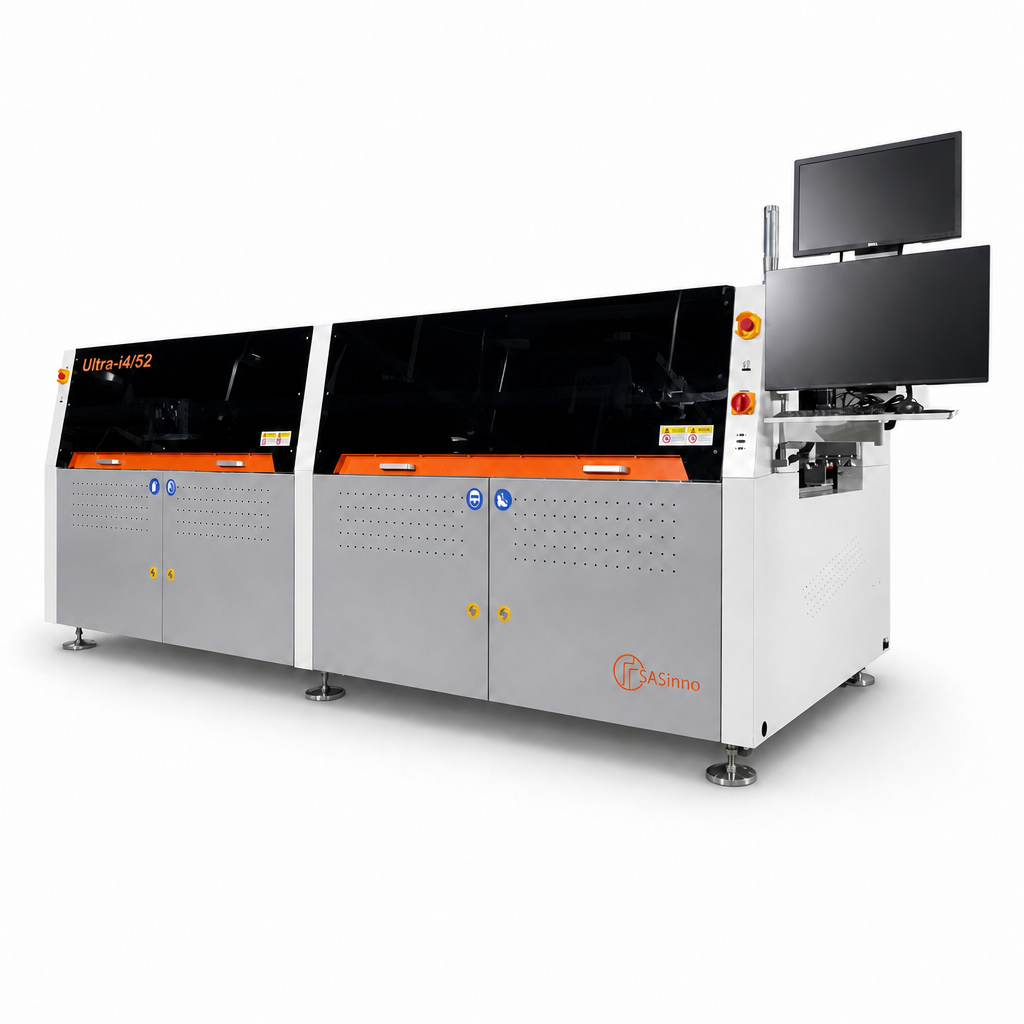
Ultra-i4/52
Inline system with four electromagnetic pumps for single, dual and four-up PCBs.
600 × 600 mm PCB formatInlineFrequently asked questions about selective soldering systems.
When does a selective soldering system make sense?
When defined THT joints need local processing and full contact with a continuous solder wave does not fit the layout or process objective. Suitability should be evaluated on the actual assembly.
What is the most important initial size measurement?
The maximum PCB format including production panel or carrier. Then consider component heights, overhangs, joint accessibility and transport requirements.
What is the difference between offline and inline selective soldering?
An offline system is a standalone cell with separate loading and unloading. An inline system receives the assembly from the manufacturing line. The choice depends on batch size, product mix, automation level and existing line infrastructure.
What information is needed for a soldering trial?
PCB layout, hole and component pattern, sample assemblies, solder and flux, thermal limits and agreed quality criteria. Target volume, desired cycle time and line-integration data are also useful.
Are cameras, automatic wave-height calibration and nitrogen heating standard?
These functions are documented as standard on several Ultra models. Exact equipment still varies by model and configuration. The relevant product page and agreed quotation are authoritative.
Explore fluxing, preheating and soldering · Compare inline and offline systems
Your process begins
with your assembly.
Tell us the format, application and desired production integration.