
Process · Laser Marking
Mark PCBs with a CO₂ laser
The LM510-C marks characters, 1D barcodes and QR codes on PCBs. CCD recognition supports positioning and verification of the applied codes.
How laser marking works.
The CO₂ laser moves over the PCB and marks defined areas. A camera recognises fiducials and compensates for positional deviations; subsequent code verification checks readability.
Typical application
Laser marking can identify an assembly during production. Marking material, area, position, code content and permissible thermal impact should be checked in advance.
What matters when choosing a system.
PCB and marking field
Maximum PCB size and local marking field are different specifications. Both must suit the application.
Code size and readability
The smallest stated QR-code size is a machine specification. Readability on the actual material must be verified.
Double-sided marking
An automatic flipping module is available as an option.
Matching systems.
Compare systems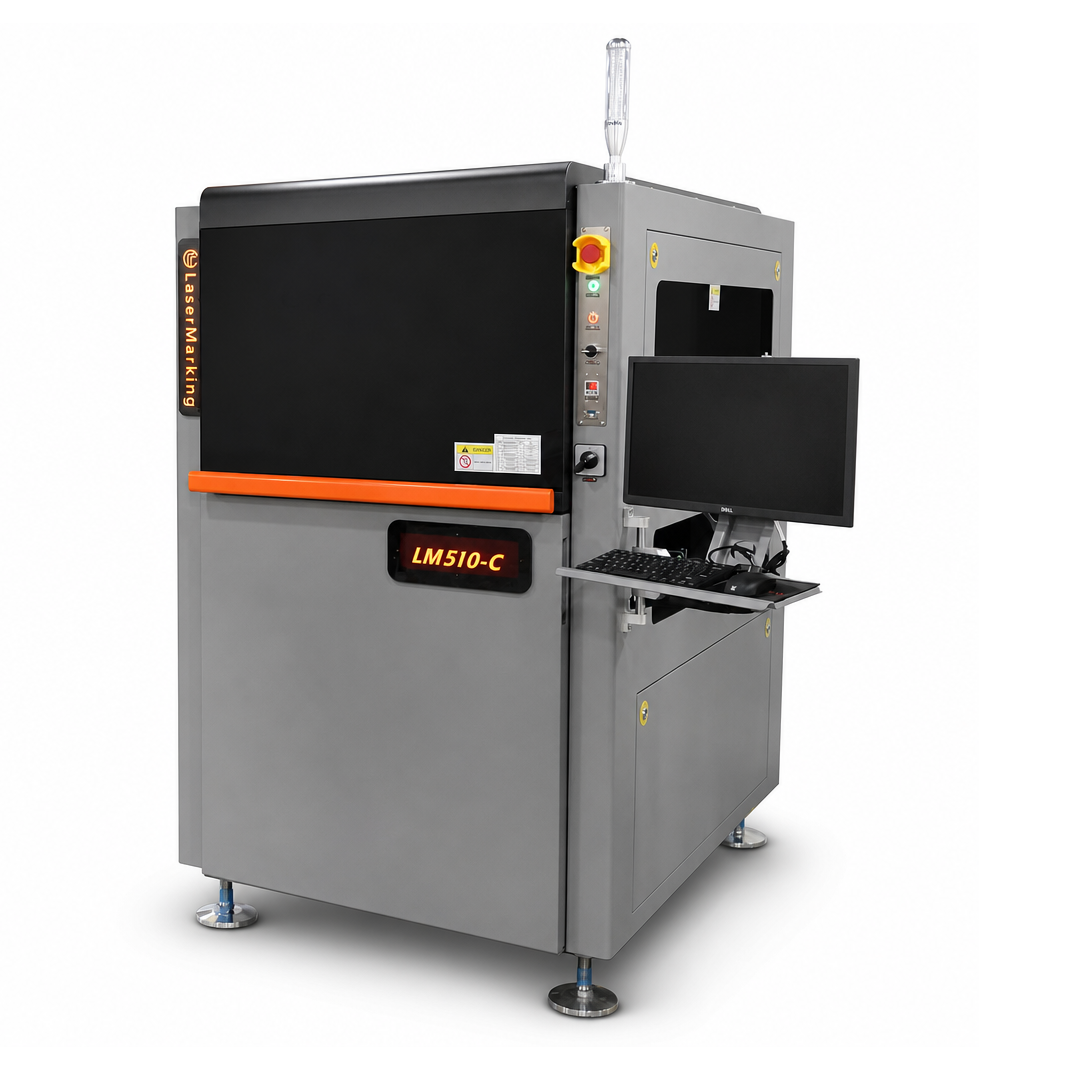
LM510-C
Marks characters, 1D barcodes and QR codes using a CO₂ laser and CCD fiducial recognition.
510 × 510 mm maximum PCB sizeInlineFrequently asked questions about laser marking.
Which codes can the system process?
The technical specifications list characters, one-dimensional barcodes, QR codes and drawing data.
Is double-sided marking possible?
Double-sided marking can be configured with the optional flipping module.
Your process begins
with your assembly.
Tell us the format, application and desired production integration.